How to Stay Active After 50 Without a Gym Membership
You do not need a gym to stay strong, mobile, and energetic after 50. Here is a practical, joint-friendly approach to daily movement you can do at home and in your neighborhood.
Staying active is one of the best things you can do for your body and mind as you age — it supports balance, mood, heart health, and independence. The good news is that a gym is entirely optional. With a little consistency, your home and neighborhood offer everything you need.
Why movement matters more as we age
After about age 50, we naturally lose muscle mass and bone density more quickly. Regular movement slows that decline, keeps joints mobile, supports a healthy heart, and has a well-documented positive effect on mood and sleep. The aim is not to train like an athlete — it is to stay capable of the everyday things you enjoy, from gardening to carrying groceries to playing with grandchildren.
Always check with your doctor before starting a new routine, especially if you have heart concerns, joint problems, or have been inactive for a while. What follows is general guidance, not medical advice.
Start with walking
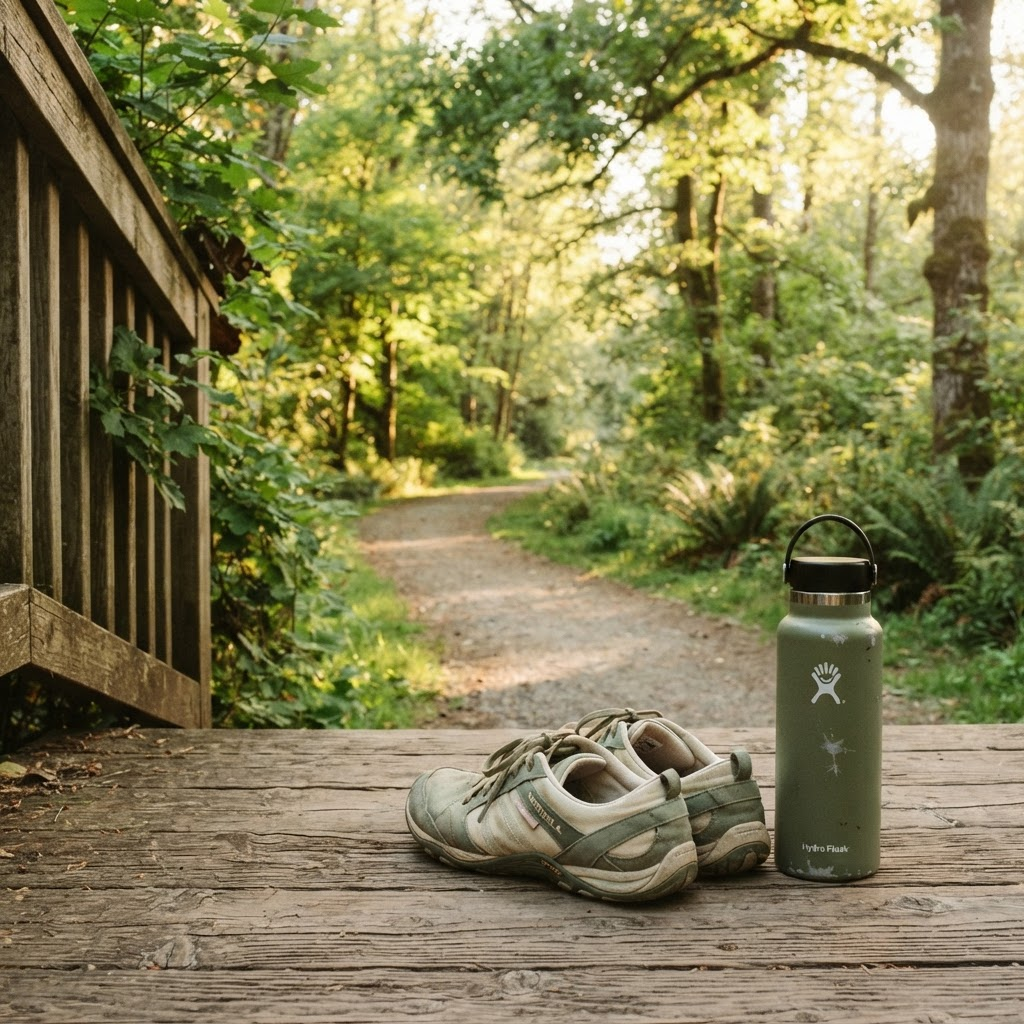
Walking is free, low-impact, and remarkably effective. Begin with a comfortable 10-minute walk and build up gradually toward 30 minutes on most days. Supportive shoes make a real difference, and a walking companion — a spouse, neighbor, or dog — makes it far easier to keep the habit.
- Walk after meals to aid digestion and steady blood sugar.
- Use a hill or a few porch steps to add gentle intensity.
- Break it up: three 10-minute walks count just as much as one 30-minute walk.
Add simple strength training twice a week
Strength work is the single best defense against age-related muscle loss, and you can do it with your own body weight or a pair of light dumbbells (a couple of soup cans work in a pinch). Two short sessions a week is enough to make a meaningful difference.
- 1Sit-to-stands: rise from a sturdy chair without using your hands, then sit back down slowly. Do 8–12.
- 2Wall push-ups: stand arm’s length from a wall and push in and out. Do 8–12.
- 3Heel raises: hold a counter and rise onto your toes, then lower. Do 12–15.
- 4Standing rows with a light weight or resistance band. Do 10–12.
Protect your balance
Balance is a skill that fades if we do not practice it — and preserving it is one of the best ways to stay independent and avoid falls. Balance work takes only a few minutes and can be done while you wait for the kettle to boil.
- Stand on one foot near a counter for 10–20 seconds, then switch.
- Walk heel-to-toe in a straight line across the kitchen.
- Practice standing up from a chair slowly and with control.
Stay flexible and loose
Gentle stretching keeps you comfortable and mobile. Focus on the areas that tend to stiffen: shoulders, hips, hamstrings, and the lower back. Move slowly, never bounce, and stretch only to the point of mild tension, never pain. Gentle yoga or tai chi — many free videos exist online — combines stretching, balance, and calm breathing beautifully.
Make it stick
The best exercise plan is the one you will actually do tomorrow, and the day after that.
Attach movement to things you already do — stretch while the coffee brews, walk after lunch, do heel raises while brushing your teeth. Track your days on a simple calendar; seeing a streak is quietly motivating. And be kind to yourself on the days you do less. Consistency over months and years, not intensity in a single week, is what keeps you strong and independent.